CLEAR-CUT, 2025
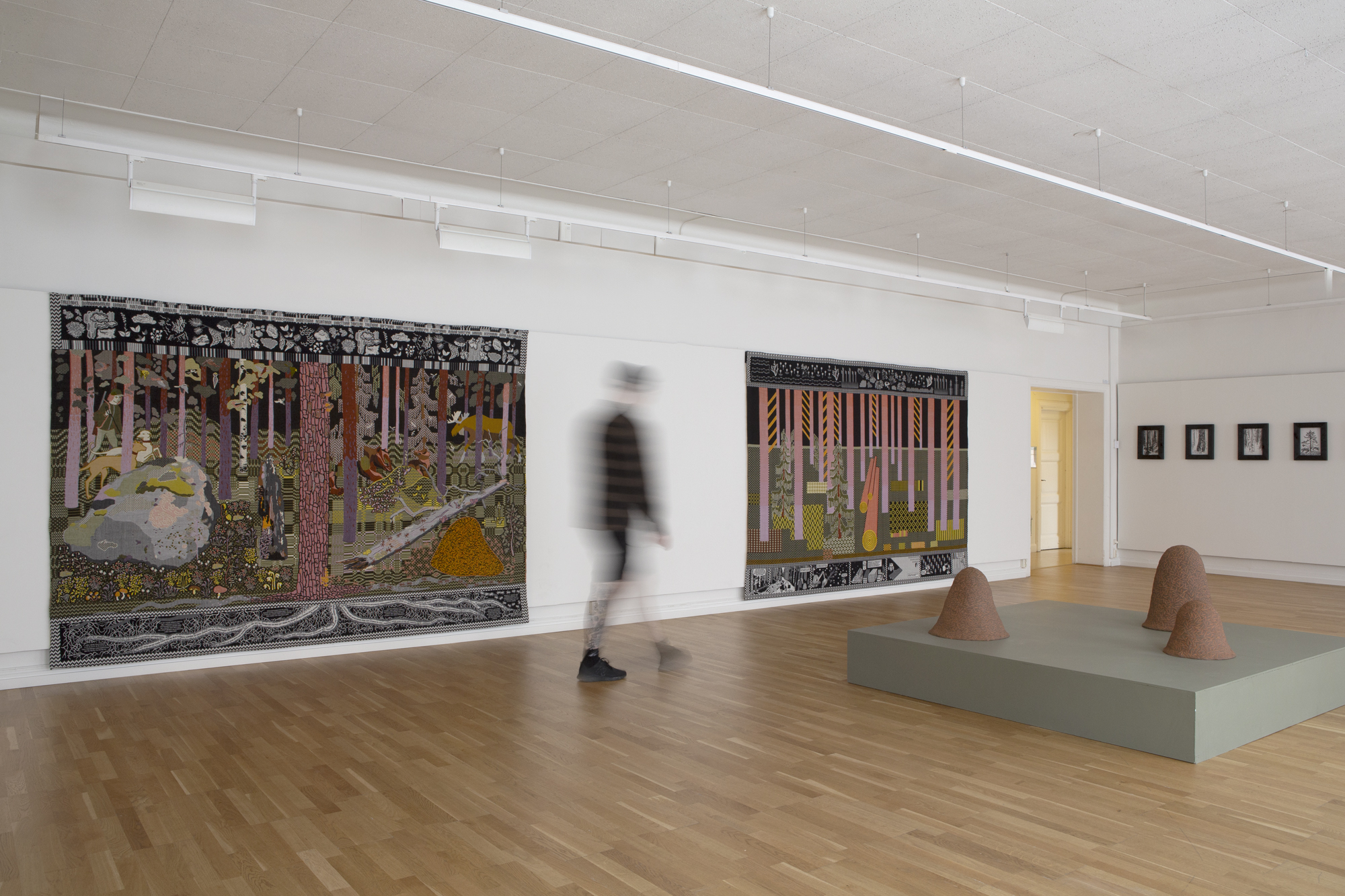
Exhibition at Orsa Konsthall showcasing two large narrative tapestries, drawings and sculptures.
The summer exhibition ’Clear-cut’ by Emilia Bergmark at Orsa Konsthall, centres on Sweden’s forests in a time of climate crisis and biodiversity loss. In the small town of Orsa, forestry has shaped both the land and the lives that grew up around it. It helped build the village and laid the groundwork for the regional welfare. But today, only fragments remain of the old, ecologically rich forests once rooted here.
In the summer of 2024, Bergmark spent time in Orsa, walking through the woods, speaking with biologists, forest owners and foresters. She listened to their stories and perspectives - personal, practical, scientific - and gathered them into a larger question: what is a forest, really? And what kind of forests do we want for the future?
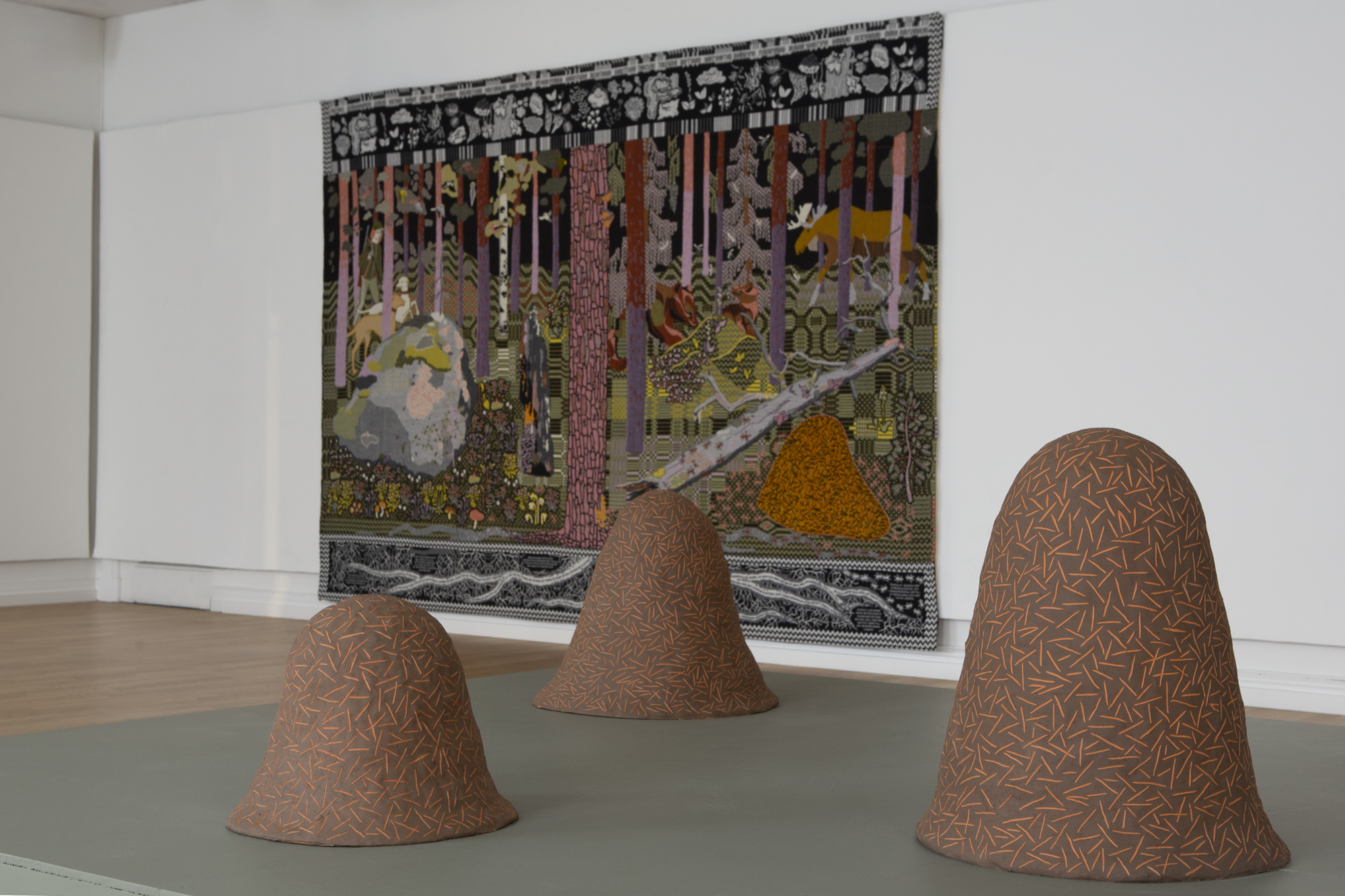
From this fieldwork, ’Clear-cut’ took shape. At its core are two woven tapestries, each telling the story of a forest. One shows a natural, ancient woodland - an unruly, living world, shaped over millennia, teeming with species and symbiotic life. The other depicts a plantation: straight lines of identical trees, planted to be felled in steady cycles, measured in decades.
Many of the plants, fungi and animals that thrive in wild forest can’t survive in the uniform landscapes of the production forest. Though Sweden is still rich in trees, the last old-growth forests - those that have grown wild,
untouched by machines and clear-cutting - are disappearing. And once they’re gone, we may never see their like again.
Throughout the exhibition, threads of imagery and language tangle and connect. Lichens like quiet signals of age.
Daldräll and Rosengång, regional weaving patterns. Root threads and fungal networks. Fäbodristningar, carved messages from the past. Knärot, a shy orchid that live in the wet mosses of old-growth forests. Moose. Pine. Clear-cuts. Together, they form a web of local forest lore - one that reflects much broader, planetary questions about how we live with and within nature.
The exhibition was kindly supported by Region Dalarna, Danish Art Foundation, Danish National Workshops for Art, Orsa Besparingsskog, Grosserer L. F. Fogats Fond, Jorck’s Fond, Vevft and Leveld Kunstnartuin. In the making of the exhibition Emilia have received help and knowledge from Naturskyddsföreningen i Orsa, Skydda Skogen, Orsa Besparingsskog, Spillkråkan, Orsa hembygdsgård, and several knowledgeable locals, thank you for your generosity.
Emilia Bergmark, exhibition view, Clear-Cut, Orsa Konsthall, Orsa, 2025. Photo: Maja Daniels


Cut and Burn
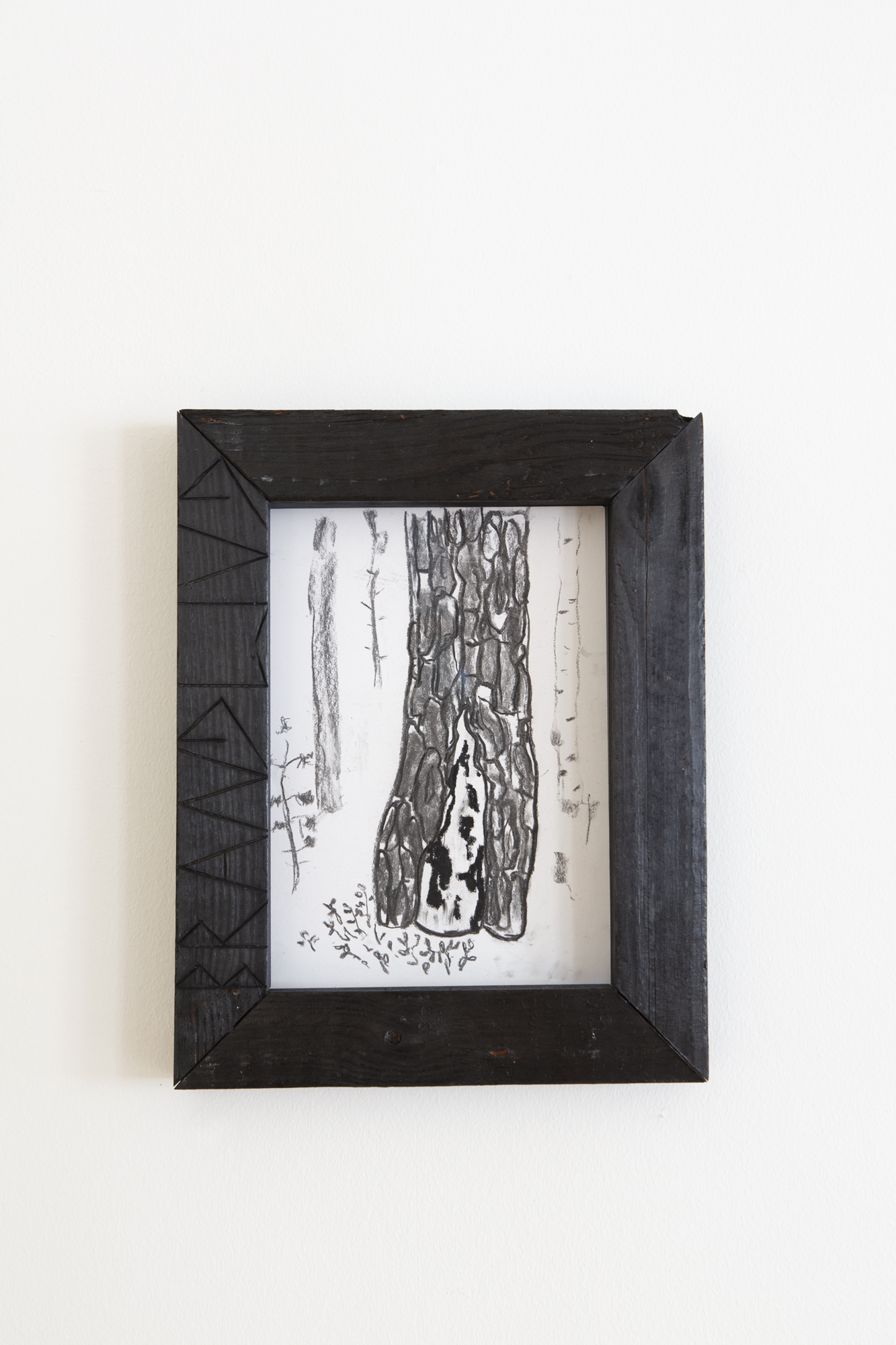
Twelve charcoal drawings in charred pinewood frames, 36x45 cm
In the series ’Cut and Burn’, we see charcoal drawings made in the summer of 2024 in two old natural forests near Orsa, which are about to be logged or have already been clear-cut. These forests had high ecological value and were home to several endangered species that were destroyed during logging.
The series title ’Cut and Burn’ is a commentary on the fact that 80% of the wood that is logged is turned into short-lived products like toilet paper, packaging, and biofuels. Most of the harvested wood, therefore, ends up as products that are soon burned up. The frames are custom-made by designer Christian Fisker, using charred pine wood, with carvings inspired by ’fäbodristningar’ a type of local engravings in trees.
Emilia Bergmark, exhibition view, Clear-Cut, Orsa Konsthall, Orsa, 2025. Photo: Maja Daniels